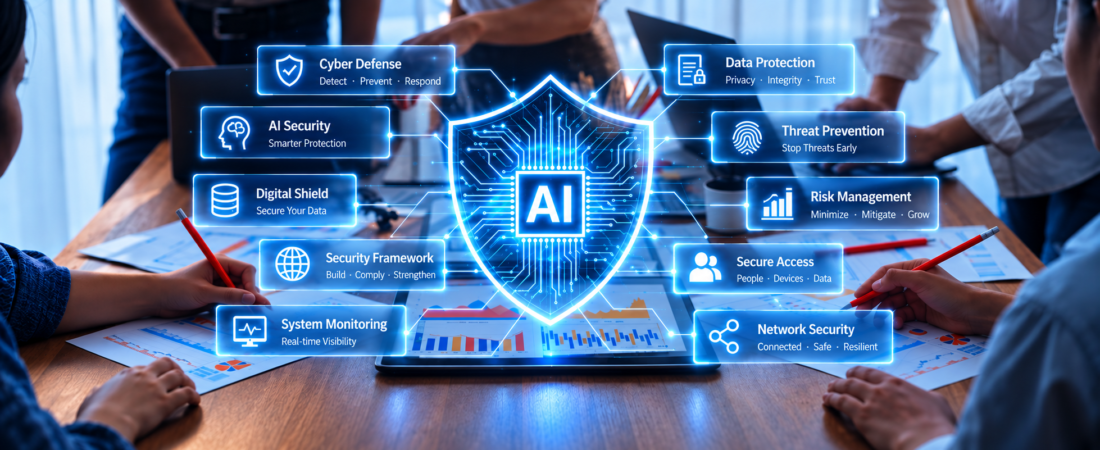
Cybersecurity has become harder to manage as businesses use more devices and cloud services. Security teams also have to deal with a huge amount of alerts everyday. Finding the real threat among all that activity can take a lot of time.
This is where AI cybersecurity software can help.
Modern security platforms can use artificial intelligence and machine learning to study activity and find unusual patterns. They can help security teams detect threats faster and investigate incidents with less manual work.But AI is not a magic shield against every cyberattack. It is another part of a wider security strategy. The right software depends on what a business needs to protect and how its existing security systems work.
What Is AI Cybersecurity Software?
AI cybersecurity software is security software that uses artificial intelligence or machine learning to support tasks such as threat detection and security monitoring.Traditional security tools often depend on rules and known threat signatures. Those methods are still useful. AI can add another layer by looking for unusual behavior and patterns that may need investigation.
For example a user may normally access a small number of company systems during working hours. If the same account suddenly starts accessing unusual systems from an unfamiliar environment the activity may be flagged.That does not automatically mean an attack has happened. It simply gives the security team a signal that deserves attention.
Different products use AI in different ways. Some focus on endpoint protection. Others focus on networks or cloud environments. Some help security operations teams investigate and prioritize alerts.So the important question is not simply whether a product uses AI.
The better question is what does the AI actually do?
How Does AI Cybersecurity Software Work?
The basic process is fairly simple.Security data is collected from different sources. The software then analyzes that information and looks for patterns or unusual behavior.
A typical process looks like this:
Security data → Analysis → Detection → Prioritization → Investigation → Response
The data can come from endpoints and servers. It can also come from networks and cloud systems. Identity platforms and applications can provide useful information too.After collecting the data the system looks for signals that may indicate a security problem.
AI can then help prioritize alerts. This matters because security teams can receive a large number of alerts. Not every alert deserves the same level of attention.Some platforms can also connect events from different systems. This can give analysts more context when they investigate an incident.
Depending on the product the software may recommend an action or automate a specific response.Human oversight still matters. A security system can make mistakes. An incorrect automated action could also affect legitimate users.
NIST is currently studying both the use of AI for cyber defense and the security risks created by AI systems. Its work shows that AI can create new opportunities for defenders while also introducing new security challenges.
Types of AI Cybersecurity Software
There is no single type of security product that fits every business.
AI Endpoint Security
Endpoint security protects devices such as laptops and servers.AI can help analyze activity on these devices and identify behavior that may indicate malware or another threat.
AI Network Security
Network security software monitors network activity.It can help identify unusual connections and traffic patterns that may require investigation.
AI Cloud Security
Businesses now depend heavily on cloud platforms.
Cloud security tools can monitor cloud workloads and configurations. They can also help identify unusual activity involving accounts and cloud resources.
AI Identity Security
Identity security focuses on accounts and access.AI can help identify unusual login behavior or suspicious access patterns.
AI Email Security
Email remains an important attack path.AI based email security can analyze messages and other signals to help identify phishing and suspicious content.
AI Security Operations Platforms
Some platforms focus on the security operations center.They can help analysts investigate incidents and organize large volumes of security information.
What Can These Tools Detect?
The exact capabilities depend on the product.
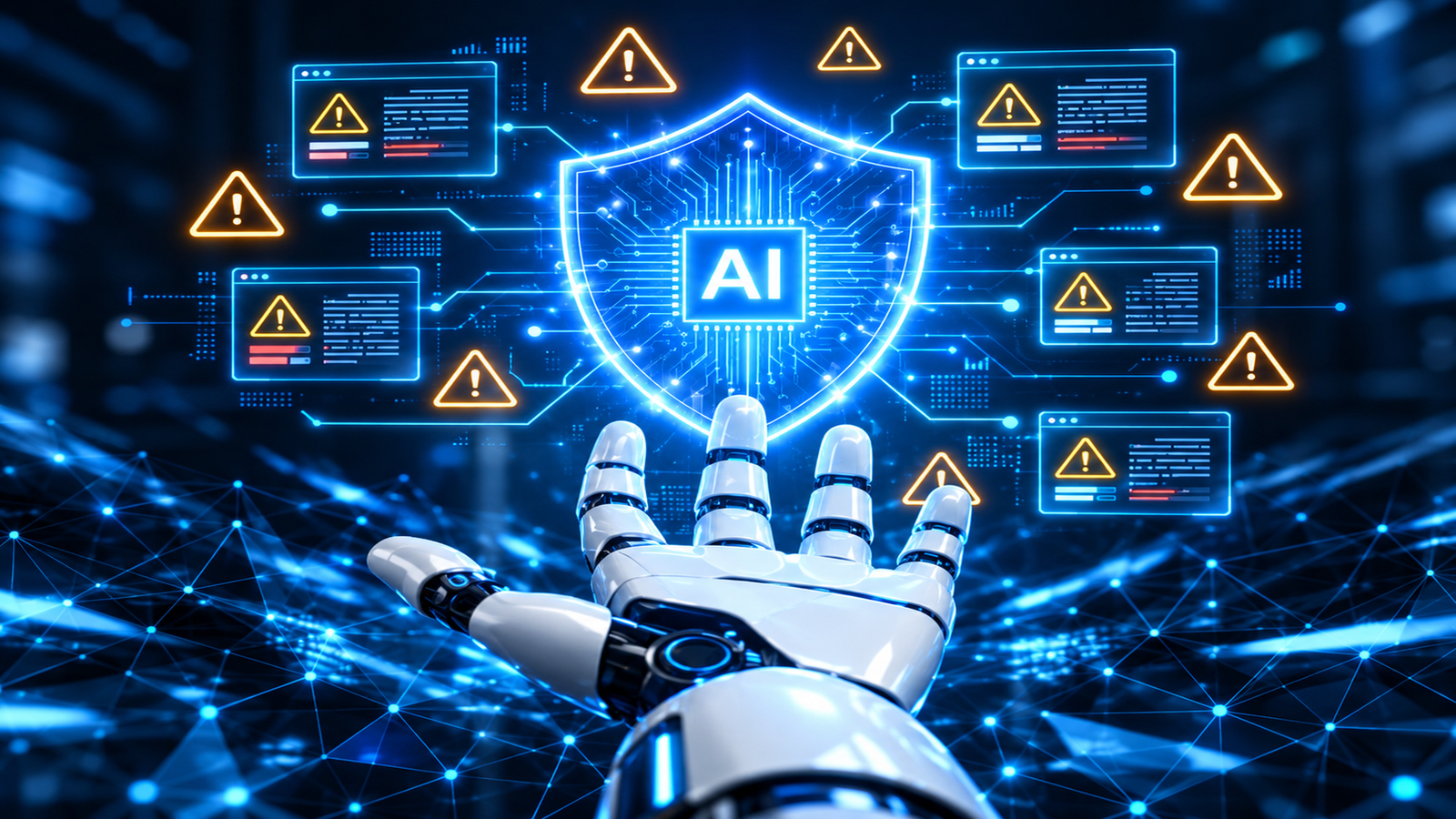
Common use cases include:
- Malware activity
- Suspicious login behavior
- Phishing attempts
- Unusual network activity
- Account compromise signals
- Ransomware related behavior
- Cloud security issues
- Vulnerabilities
- Suspicious user behavior
It is important to avoid treating any AI system as a guarantee of detection.Security tools work with the information available to them. Poor data and weak configuration can limit their usefulness.
Important Features to Look For
When comparing AI cybersecurity software do not focus only on the word AI. Look at the actual features.
Behavioral Detection
The platform should be able to analyze behavior and identify activity that looks unusual.
Alert Prioritization
A useful platform should help security teams understand which alerts deserve attention first.
Automated Response
Some systems can automate actions such as blocking an indicator or isolating an endpoint.Find out which actions can happen automatically and which require approval.
SIEM Integration
If your company already uses a SIEM system then integration can be important.A new security product should ideally work with the systems already in place.
EDR and XDR Integration
Organizations using endpoint or extended detection tools should check how well the new platform connects with them.
Audit Logs
Security teams need to understand what happened and why a system made a particular recommendation or took an action.
Data Controls
Check where security data is processed and how long it is stored.Also understand who can access the data and how the vendor protects it.
Benefits of AI Cybersecurity Software
One of the biggest benefits is faster analysis.
A person cannot manually review every security event in a large environment. Software can process large amounts of information much faster.AI can also help with repetitive investigation work.
Another benefit is alert prioritization. Instead of treating every event as equally important a security platform can help analysts focus on signals that deserve closer attention.
AI can also support continuous monitoring and security automation.NIST has also identified AI enabled cyber defense as an area where organizations may use AI to improve cybersecurity capabilities. At the same time NIST points out that AI systems need proper evaluation and risk management.
Limitations and Risks
AI is useful but it has limits.A system can produce false positives. This means legitimate activity may be treated as suspicious.
It can also miss a real threat.The quality of the data matters too. If important information is missing then the system may have less context for making a useful decision.
Privacy is another issue.Businesses should understand what information is collected and where that information is processed.
AI systems also introduce their own security risks. NIST notes that AI systems can face issues such as adversarial machine learning attacks and other risks involving their data and models.
This is why AI should be part of a wider security strategy rather than the only security measure.
AI Cybersecurity vs AI Security
These two terms can sound similar but they are not always talking about the same thing.
AI powered cybersecurity means using AI to help protect systems and networks.
AI security can mean protecting AI systems themselves.For example a company may use AI to detect suspicious activity on employee computers.Another company may need security controls for an AI application that uses sensitive data.
Both areas matter as AI becomes more common in business.NIST describes this broader challenge as a combination of using AI to improve cybersecurity and protecting AI systems from cybersecurity risks.
How to Choose AI Cybersecurity Software
Start with the problem instead of the product.Ask what you actually need to protect.Do you mainly need endpoint protection?Are cloud systems your biggest concern?Do you have too many security alerts?
Are suspicious account activities becoming difficult to investigate?Once the main problem is clear you can look at the software category that fits it.Next check your existing security stack.Look at your SIEM and endpoint tools. Check your identity systems and cloud platforms too.Integration can matter as much as the AI features.
You should also test the software before making a major commitment if a trial or proof of concept is available.Test it with realistic security scenarios.Look at how it handles alerts. Check the investigation process. Review automated actions. See how well it fits your current workflow.Finally look beyond the license price.Implementation and training can also affect the real cost of a security platform.
Common Mistakes to Avoid
One common mistake is buying software simply because it has AI in its marketing.AI does not automatically mean better security.Another mistake is expecting AI to replace cybersecurity professionals.Security teams still need people who can understand the business environment and make decisions about risk.
Ignoring integrations is another problem.A product can have useful features but still create extra work if it does not connect properly with existing systems.Businesses should also avoid making decisions based only on a product demonstration.A real test can reveal problems that are not obvious during a sales presentation.
AI Cybersecurity Software Checklist
Before choosing a platform ask these questions:
- What assets do we need to protect?
- What security problem are we trying to solve?
- What tools do we already use?
- Does the new platform integrate with them?
- What does the AI actually do?
- What data does the system require?
- Can analysts understand why an alert was created?
- Which actions can be automated?
- Can important actions require human approval?
- Where is our security data processed?
- Can we test the platform first?
- How will we measure the results?
- What will the total cost be?
Frequently Asked Questions
Is AI cybersecurity software worth it?
It can be useful when it solves a real security problem. The value depends on the organization’s environment and how well the software fits existing security operations.
Can AI replace cybersecurity professionals?
No. AI can assist with analysis and automation but people are still needed for oversight and complex security decisions.
Can AI detect every cyberattack?
No. No security product should be treated as a guarantee against every attack.
Is this software useful for small businesses?
It can be. Small businesses should focus on solutions that provide the security capabilities they need without creating unnecessary complexity.
What is the most important feature?
There is no single feature that is most important for every organization. Detection quality and integration are often important but the right choice depends on the specific security problem.
Conclusion
AI cybersecurity software is becoming an important part of modern security operations.It can help organizations analyze large amounts of security data and identify activity that deserves attention. It can also support alert prioritization and automate selected security tasks.
But AI is not a replacement for a complete cybersecurity strategy.The right approach is to start with your security needs. Understand what you already have. Check integrations. Review data controls. Test the software and measure its results.
The goal should not be to buy the product with the most AI features.The goal should be to choose a security solution that actually helps your organization manage its risks.